Inherited Tools and Offcuts: Clearing a Relative’s Workshop Without Rushing the Scrap
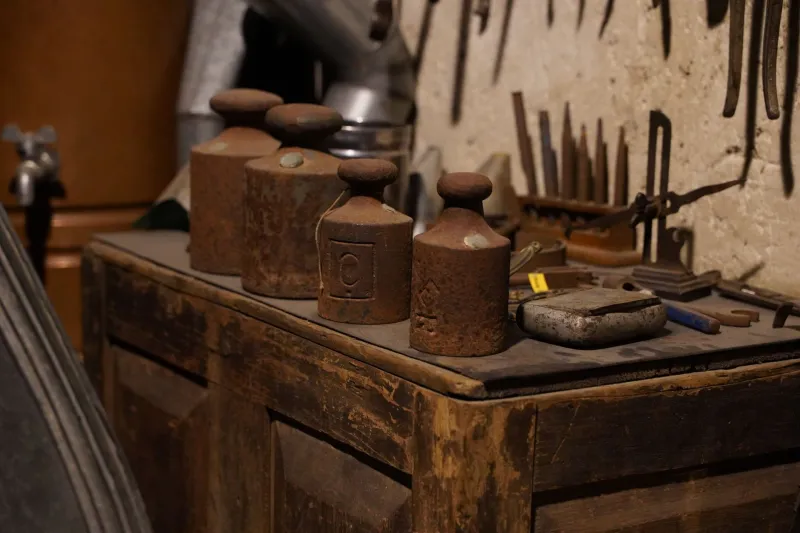
Clearing a relative’s workshop is not really a scrapping job. It is a slow walk through someone’s habits: the coffee tin of screws, the bench with a worn smooth edge, the drawer of mysterious keys. The metal is tangled up with memory, and that is exactly why it deserves a calmer approach than a quick skip and a shrug.
Start with a pause, not a skip
Before you pick up a single spanner, take photos of the room as it is. Photograph the bench, the shelves, the dark corners and anything that looks old, heavy or unusual. These pictures help later if you need to show what was there, and they give family members a chance to say ‘wait, I remember that’ before it disappears into a van.
Then set a realistic pace. A workshop can hold decades of offcuts, jam jars, cables, broken power tools and half-finished projects. You do not have to clear it in one weekend. In fact, rushing is how sentimental items end up in the scrap pile and low-value rubbish ends up costing you a collection fee.
Safety before sentiment — and before scrap
Old workshops are full of small hazards. Watch for sharp edges, unstable stacks, heavy bench tools, dusty wiring and containers that might still hold fuel, oil, paint, thinners or weedkiller. Do not open sealed drums to ‘see what’s inside’. Do not put gas cylinders, old batteries, aerosols or unknown chemicals in with scrap metal. Your local council household waste site or a hazardous waste service is the right route for those.
If the workshop is attached to an old building, keep an eye out for asbestos-containing materials, especially around old flues, boiler cupboards or corrugated roof sheets. If you are unsure, stop and get advice. No scrap price is worth inhaling the wrong dust.
Lift smart, too. A steel vice or a bench grinder is not just awkward — it can be genuinely dangerous to move alone. Clear a path, use gloves, and ask for help with anything that fights back.
The memory box comes first
Before you sort for weight, sort for meaning. Put aside anything with a name painted on it, a homemade handle, a note taped underneath or a story attached. A spanner with your dad’s initials on it is not just steel. Neither is the wooden plane that grandad used, even if the blade is past saving.
Give family members a short window to claim small keepsakes. Be practical: you cannot keep everything, and you do not need to. But a clear ‘memory box’ rule — one crate, agreed early — stops every rusty hinge becoming an argument. Once the keepsakes are safe, the rest of the workshop is easier to see as materials and jobs to be done.
Paperwork for executors: simple records beat guesswork
If you are the executor, you may need to list estate assets for probate. Scrap metal is usually a modest part of that, but old machinery, quality tools and workshop equipment can carry value beyond their weight. Photograph items, note serial numbers where you can, and keep any quotes or collection receipts with the estate papers.
You do not need to become an amateur auctioneer. You do need a paper trail. A documented scrap collection is useful because it shows what low-value metal went where and what it realised. If inheritance tax is in the picture, take advice from a solicitor or accountant rather than guessing. And keep the scrapping separate from the sentimental sorting — one is an estate task, the other is a family one.
Sort the metal without overthinking it
You do not need to grade like a professional, but a rough sort helps everyone. Keep obvious ferrous and heavy steel together — bench frames, old tool boxes, pipe offcuts. Keep non-ferrous metals apart where you can: copper pipe, brass fittings, aluminium sheet, lead flashing, cable. Cables are worth keeping separate because the copper inside is a different value from the plastic around it.
Drain oil and fuel from old machinery where it is safe to do so, and keep those fluids out of the metal pile. Remove obvious rubbish, wood, plastic and rags. A cleaner load is easier to price and less likely to attract a contamination deduction. If something is mostly plastic with a little metal inside, it is usually not a scrap item — it is a dismantling job or a waste item.
Pick a collector who shows the working
In England and Wales, scrap metal dealers need a licence from the local authority, and cash payments for scrap are not allowed. Ask for the dealer’s licence details, a receipt and an electronic payment. In Scotland, the rules differ, so check what applies locally. The principle is the same: a fair collector is happy to be documented.
Ask how the load will be graded — light iron, heavy steel, copper, brass, aluminium, cables — and whether a collection charge applies if the metal value is low. A mixed workshop load is rarely a jackpot. The honest version is often: some items have resale or sentimental value, some weigh in, and some cost money to dispose of properly. A clear collector will say that early, not after the van is loaded.
What a fair price looks like on a mixed workshop load
A fair price is not just the biggest number shouted across a driveway. It is a price you can trace. You should know what was weighed, how it was graded, what deductions were made and when payment will arrive. For an estate, that matters as much as the total. It gives you something to file, something to show another family member, and something to fall back on if questions come later.
At B&P Scrap Co., we would rather you book a collection when the sorting is done than rush a load out of the door. A priced, documented collection gives you a paper trail for the estate and a fair number for the metal. No pressure, no mystery deductions, no scramble.
A sensible order of events
Take photos. Make the memory box. Check for hazards. Remove sentimental tools and family keepsakes. Sort the obvious metal from the obvious rubbish. Get advice on chemicals, gas cylinders and asbestos. Then book a documented collection for what remains.
It will still be a difficult job. But it will be a difficult job done with care — and that is usually the best thing you can offer, alongside a fair price for the metal your relative kept for a rainy day.