The December Cable Cull: Sorting Fairy Lights, Chargers and Dead Gadgets Before the Tree Goes Up

Photo: tangled fairy lights cables chargers Christmas clear out UK home, via image.tmdb.org
The loft box nobody wants to open
Every November, somewhere between hunting for the tree stand and discovering that the good baubles are still in the garage, most UK households end up face to face with a box of cables. It is usually a shoebox, a carrier bag or a plastic tub with a broken lid. Inside: fairy lights that flicker only when you hold the plug at a very specific angle, chargers for phones you no longer own, an extension lead with a cracked casing, and at least one mystery adapter that could belong to anything.
It is tempting to tip the lot into the bin and buy replacements. But there is metal in that mess, and some of it is worth separating. Not enough to fund Christmas dinner, perhaps, but enough to make a priced scrap collection worth considering if you are already clearing out the garage or shed.
This is a practical guide to the pre-Christmas cable cull — what to keep, what to bundle, what to recycle separately, and when calling in a collector beats a trip to the local household waste and recycling centre.
Fairy lights: low value, but not always rubbish
Dead fairy lights are the classic Christmas clear-out item. The wire is usually thin copper, often coated in green or black plastic. The bulbs may contain small amounts of metal, and the plug has brass pins. On their own, a single string of lights is not going to weigh much. A whole box of them, though, starts to add up.
Check first whether they are actually dead. A loose fuse in the plug or a damaged bulb can be an easy fix, and repairing a string you already own is usually the greener option. If they are beyond saving, do not strip the wire yourself. Thin copper wire is fiddly, and cutting into live or damaged cables is a risk nobody needs before Christmas.
Bundle dead lights separately from other cables if you can. Keep the plugs attached and tie each string loosely so it does not tangle around everything else. A carrier bag of fairy lights will not make you rich, but it is a clean, recognisable bundle for a scrap collector.
One quick note on tinsel: most modern tinsel is plastic film, not metal. It is not scrap and it should not go into a metal collection. The same goes for foil-covered decorations that are mostly card or plastic. If a magnet does not stick and it feels like film, it is probably not worth separating.
Extension leads and chargers: the copper hiding in plain sight
Extension leads are one of the better items in the cable box. A decent-length lead contains copper conductors, and the plug pins are brass. Even a broken lead has value, as long as it is not burnt, waterlogged or wrapped around something hazardous. Coil it loosely, tape the ends or fit the plug back on, and keep it in its own bag.
Phone chargers, laptop power supplies and mystery adapters are a mixed bag. The cables themselves are usually low-grade copper, and the bulky plugs contain small transformers, capacitors and a bit of metal. They are not high-value scrap, but they are not nothing either. If you have a shoebox full, it is worth keeping them together rather than scattering them through the general waste.
Do not cut the plugs off and bin the rest. That is more work for you and less recovery for the recycler. Leave chargers intact unless a qualified person is stripping them.
Small appliances and the dead-gadget shelf
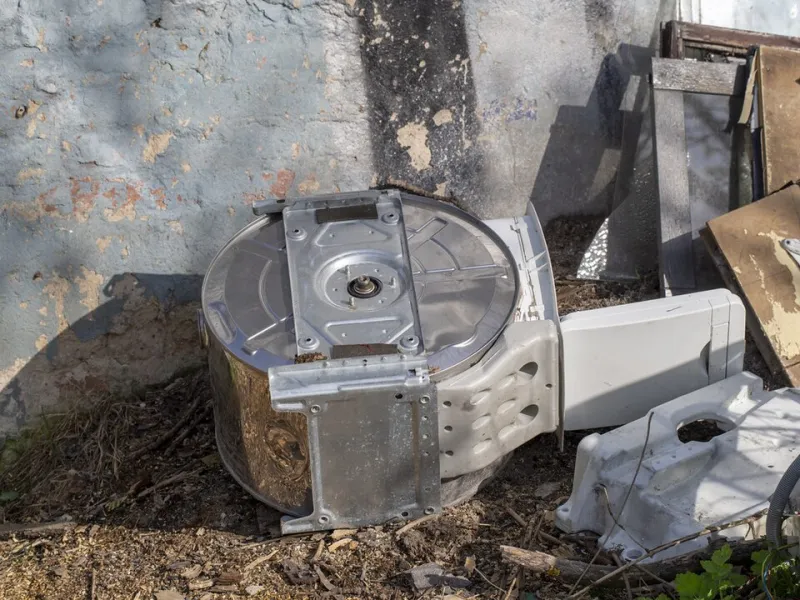
Christmas clear-outs often uncover small appliances that have been waiting for a repair that never happened: a kettle with a faulty switch, a hand blender with a burnt-out motor, an old toaster, a bedside lamp with a cracked base. These contain steel, aluminium, copper wiring and sometimes brass fittings. They are worth separating from the general rubbish.
Before they go into a scrap collection, remove batteries where possible — especially lithium-ion cells from cordless tools or rechargeable gadgets. Damaged or swollen lithium batteries should not go into a mixed scrap bag. Take them to a proper battery recycling point or check with your local council. A reputable collector will also tell you what they can and cannot accept.
If an appliance is still working, consider donating it or offering it on a local reuse group first. Scrap value is usually the last resort, not the first.
How to bundle safely without making a hazard
A few simple habits make a cable clear-out safer and easier to price:
- Keep cables coiled and tied. Tangled wire slows down sorting and can hide damage.
- Tape over exposed plug pins or fit the plug if you have it.
- Keep batteries separate from metal scrap.
- Do not mix in paint tins, aerosols, gas canisters or anything that could leak.
- Bag fairy lights, extension leads and chargers separately so the collector can see what is what.
- Store the bundles somewhere dry until collection day.
If you are unsure whether something counts as scrap, ask before you book. A fair collector would rather answer a quick question than turn up to a bag of surprises.
Recycling centre or priced collection?
For a small carrier bag of chargers and one string of lights, the local recycling centre is usually the sensible option. Most UK household waste sites accept small electricals and cables, and it keeps the trip simple.
The maths changes when you have volume. If the pre-Christmas clear-out has produced a garage-worth of old appliances, a box of extension leads, several dead fairy light strings and a few gutters of mixed cable, a priced collection starts to make more sense. You are not loading the car, queuing on a Saturday morning or paying fuel costs for a mixed load that may not be accepted in one go.
At B&P Scrap Co., we price clearly before collection, so you know what the load is worth and what we can take. That is especially useful when the scrap is mixed and low-value on its own but bulky enough to be a hassle. You get a documented collection and a fair price, without the guesswork.
The pre-Christmas rule of thumb
Separate the obvious metal, keep the batteries out, do not strip cables yourself, and be honest about volume. A tidy cable cull is not just about scrap value — it clears space, keeps useful materials in circulation and stops a box of tangles from becoming next year’s problem.
And if you find a working string of lights at the bottom of the box, count yourself lucky. Plug it in before you bag it. Christmas has a way of rewarding a quick check.