White Goods, Grey Areas: What Old Appliances Are Really Worth at the Scrap Yard
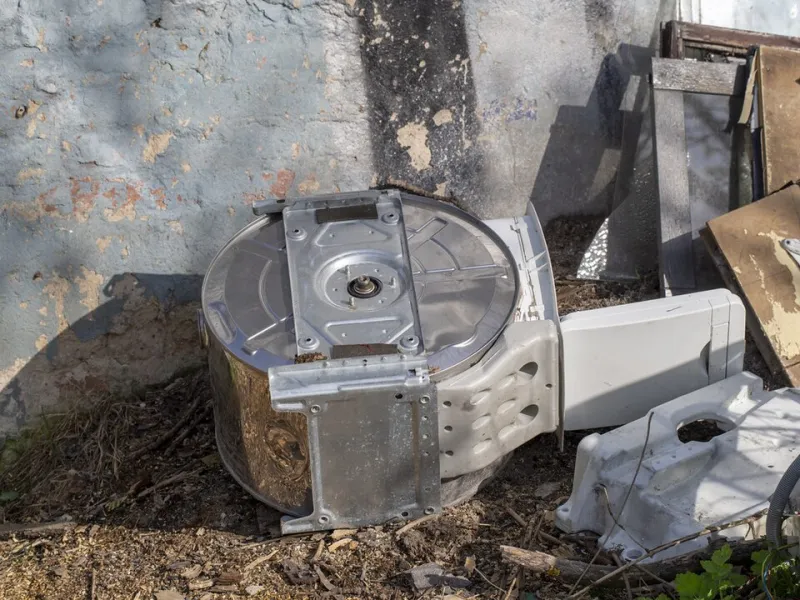
Photo: Ciddi iyi1i, CC BY-SA 4.0, via Wikimedia Commons
The appliance sitting in the way
Every UK household ends up with one eventually: a washing machine that has given up mid-cycle, a fridge that no longer gets cold, or an oven that has become more ornament than cooker. It sits in the hallway, or on the driveway, while you work out what to do with it. The temptation is to treat all white goods the same. They are bulky, they are metal-ish, and surely someone will pay you for them?
Sometimes yes. Sometimes no. The truth is that old appliances are a mixed bag. Some carry decent scrap value; others cost money to collect safely. Understanding which is which makes the difference between a fair deal and a frustrating afternoon.
First, the awkward truth about 'white goods scrap'
A scrap collector is not really buying an appliance. They are buying the metals inside it, minus the time, transport and safe handling needed to get those metals out. That is why a heavy old washing machine can be worth more than a modern dishwasher that looks similar on the outside. It is also why a fridge can be both metal-rich and awkward to process.
In 2026, UK scrap yards are still dealing with tight margins, transport costs and strict rules on hazardous waste. A collector who quotes you a price is balancing the value of steel, copper, aluminium and brass against the cost of doing the job properly. If the numbers do not add up, a collection charge is not necessarily a scam. It may simply be the honest maths of a low-value item.
What is actually inside: an appliance-by-appliance look
Washing machines
A typical washing machine is one of the better white goods for scrap. There is usually a steel outer casing, a stainless steel drum, a chunky concrete or cast-iron counterweight, and a motor with copper windings. There may also be aluminium parts, brass fittings and a fair amount of plastic. The counterweight alone can be heavy, which helps with the overall weight, even if concrete itself is not a metal you can sell.
A working machine may be better sold or donated, especially if it is relatively new. A dead one is usually a scrap proposition, but the collection still has to make sense for the collector. If you are miles from the yard and the machine is up a narrow staircase, expect that to affect the offer.
Fridges and freezers
Fridges are the classic 'metal but complicated' appliance. They contain steel, copper, aluminium and sometimes useful components in the compressor. But they also contain refrigerant gases and foam insulation that must be handled correctly. That is why fridges and freezers are not something to smash up in the back garden or leave on the pavement with a hopeful note.
Some scrap collectors will take them, but many will charge for collection because of the safe degassing and disposal requirements. The metal value can offset part of that cost, but rarely turns a old fridge into a cash windfall. If a retailer is delivering a new fridge, their take-back service is often the simplest route.
Ovens and cookers
Ovens are often heavier than people expect, but a lot of that weight is steel, enamel and insulation rather than high-value non-ferrous metal. A basic electric oven may have very little copper inside. A range cooker can be a different story, with more metal and more bulk, but it is also harder to move.
If the oven still works, selling it on is usually the better financial move. If it is truly finished, a scrap collection can be sensible, but do not assume it will cover the collection cost on its own. Ask for a clear explanation of how the price was worked out.
Dishwashers
Dishwashers contain steel, plastic, some copper wiring and aluminium parts, but they are generally lighter and less metal-dense than washing machines. They are also awkward to drain and move without leaking water everywhere. A dead dishwasher is rarely a high-value scrap item, though it can still be collected as part of a larger metal clear-out.
Why some appliances cost to collect and others do not
A fair collection price is not just about the metal. It is about access, weight, safety and paperwork. A washing machine on a driveway in a city is a very different job from a fridge in a third-floor flat with no lift. A single low-value dishwasher may not justify a dedicated trip, while a mixed load of appliances, cable and old pipework can make the numbers work.
This is why a priced metal collection can be fairer than a free-for-all. If a collector explains that the steel value does not cover the journey, but they can offset it against a larger load, you can judge the offer properly. What you should not accept is a vague 'we will take it away for cash' with no weight, no price and no paperwork.
The UK rules you cannot ignore
Old appliances are classed as waste electrical and electronic equipment, often shortened to WEEE. That means they should go to an authorised site, not to a random van or the end of a quiet lane. Fly-tipping an appliance can lead to a fixed penalty or prosecution, and it is not unknown for dumped fridges to be traced back to the household they came from.
If you use a collector, ask where the appliance is going and check that they are a licensed waste carrier. Scrap metal dealers also need to be licensed. Since the cash ban for scrap metal payments came in, legitimate collectors should be able to provide a documented payment method and a receipt. A collector who is evasive about any of this is not worth the risk.
Retailer take-back, council collection or a priced metal collector
Retailers often offer to remove your old appliance when they deliver a new one. This can be convenient, but it is not always free, and it may only apply to a like-for-like item. Check the terms before delivery day. Council bulky waste collections vary hugely across the UK: some are free, some charge, and some will not take fridges at the kerbside at all.
A priced metal collection sits in the middle. You are paying for convenience and proper disposal, but the metal value should be reflected in the quote. If you have a garage full of old appliances, cable and pipework, a single collection can be more sensible than booking several council slots or paying for multiple retailer removals.
How to judge whether a collection quote is fair
Ask three questions. What is being collected? How is the price worked out? Where will it end up? A fair collector will not mind answering. They should be able to explain that a fridge carries a handling cost, that a washing machine has more steel, or that a mixed load changes the maths.
Be wary of anyone who offers a suspiciously high price for a single low-value appliance, then adds hidden fees. Be equally wary of anyone who will not put anything in writing. A legitimate scrap collection should be clear, documented and realistic.
A quick pre-booking checklist
Empty and drain the appliance where possible. Remove loose shelves, drawers and anything that is not part of the unit. Take a photo of the appliance before it goes. Check access routes and mention any stairs or tight corners. Confirm whether the collector is licensed and ask for a receipt. If the appliance still works, consider selling or donating it first.
White goods are not magic money. They are a mix of useful metal, awkward materials and real disposal costs. Once you know what is inside, a collection fee is easier to judge, and a fair scrap price is easier to spot.