What’s Really Holding a Static Caravan Together (and What It’s Worth at the Yard)
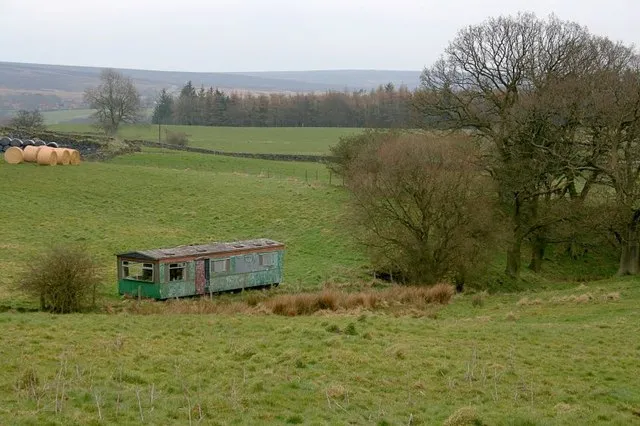
Photo: Mick Garratt, CC BY-SA 2.0, via Wikimedia Commons
The seaside retirement plan that eventually ends
Static caravans have a way of becoming part of the family. They are the place where the dog learns to sleep through seagulls, where the kettle lives permanently on the hob, and where nobody minds if the sofa is a bit tired. But every static caravan reaches the end of its useful life, and when it does, the question of what to do with it lands on someone’s lap.
Most owners think about clearance, not metal. Fair enough. But a caravan is a surprisingly rich little package of recoverable materials, and understanding what is inside helps you get a fair price instead of paying someone to take it away.
The anatomy of a caravan, roughly
The outer skin is usually aluminium, sometimes with a painted finish. Under that, there is a timber frame, insulation and a fair amount of aluminium framing in newer models. The roof and side panels are the obvious aluminium, but do not forget the window frames, door surrounds and any awning rails.
Copper lives in the wiring. A static caravan has 12-volt circuits, 240-volt sockets, lighting, a consumer unit and often an external hook-up point. The cable is not usually massive, but it adds up across a whole van. The same goes for brass fittings, taps, shower mixers and gas pipework — though gas work should be left to someone competent.
The chassis is the heavy bit. Steel girders, axles, springs, a tow hitch and the corner steadies all weigh in. If the caravan is being scrapped on site, the chassis may need to be cut down or removed in sections, which affects access and price. Tell your collector what they are dealing with before they arrive.
Then there are the appliances: fridge, cooker, water heater, fire, microwave and sometimes a washing machine. Some can be sold second-hand if they are clean and working. If they are water-damaged, rusted or simply too old, they become mixed scrap with recoverable steel, copper and aluminium inside.
Saleable versus scrap
A static caravan clearance is not just a weighing exercise. The fridge might be worth more as a working second-hand unit than as scrap. The same applies to a solid fuel stove, a good set of steps, or a recent water heater. If you have time, list the working items separately and sell them before the scrap collection. It reduces the volume and puts a bit of cash back in your pocket.
What is not worth saving? Damp chipboard, mildewed curtains, cracked plastic and anything that has been Chewed by the sea air for a decade. Be realistic. A rusty chassis is scrap; a clean stainless sink might be saleable.
The holiday park paperwork nobody mentions
This is where static caravan scrapping gets more complicated than a house clearance. Holiday parks usually have rules about when a van can leave, who can access the pitch, and what paperwork proves the van has been disposed of properly. Some parks charge a removal fee or require a licensed carrier. Others have a preferred contractor.
Read your pitch agreement before you book anything. If the park needs notice, give it. If they need a copy of the waste transfer note, ask your collector to provide one. A fair scrap collector will be used to park rules and can work around them, but they cannot magic away a locked barrier or a site office that closes at 4pm.
There is also the question of ownership. If the caravan is financed, part-exchanged or still under a park buy-back arrangement, you may not be free to scrap it without written confirmation. Sort that out first. It is dull, but it is cheaper than a dispute.
Deadlines, pressure and the rushed deal
Park deadlines are real. Many parks want old vans removed before the new season, and that creates pressure. Pressure is exactly when people accept a vague quote and a bloke with a trailer who says he will sort it. Do not do that.
Ask for a price breakdown: what is being weighed, what is being treated as mixed scrap, and whether the collection includes dismantling or just removal. If the van has to be moved off a pitch with a narrow access road, say so. If the chassis is rusted through, say so. A fair quote reflects the job, not a guess.
A sensible order of events
First, clear the personal contents. Then decide what is saleable. Next, get the paperwork from the park. After that, book a collection and ask for a written price. On the day, make sure the metal is accessible and that someone is there to confirm what is being taken.
B&P Scrap Co. works with caravan owners and park managers who want the job done without drama. The aim is simple: recover the aluminium, copper and steel properly, leave the pitch clean, and give you a clear price for what is actually there.
A static caravan is never just a tin box. It is a small building with a chassis, and when its holiday days are over, it deserves better than a rushed trip to the tip.