The Load They Won’t Weigh: What to Do With Metal Your Council Site Rejects
There’s a particular kind of disappointment that comes from being turned away at the council tip. You’ve spent an hour wrestling a radiator into the boot, tied the boot shut with an old shoelace, and then a friendly-but-firm person at the gate explains that they can’t take it. Not because they’re being awkward. Because the site’s permit, layout or insurance says no.
Metal is one of the most recyclable materials we handle, but household waste recycling centres — HWRCs, if you like the official shorthand — aren’t a free-for-all. They take what their council is set up to manage. Everything else needs a different plan. Here’s a practical one.
Why one council says yes and the next says no
There’s no single UK rulebook for tips. Each council runs its sites under its own waste permit, contracts and site restrictions. What’s accepted in one borough may be refused ten miles down the road. Some sites have separate scrap metal skips; others ask you to book bulky collections; others accept white goods only if they’re domestic and not commercial-looking.
Staff also have to think about safety and the law. Pressurised cylinders, fridges with refrigerant, oil-covered engine parts and unknown sealed drums can be genuinely risky. A site that isn’t set up for them shouldn’t take them, even if the metal inside is valuable. So before you take a refusal personally, remember the gate team is usually protecting the site, the next visitor and themselves.
The usual suspects that get refused
Gas cylinders and patio gas bottles are a classic. They’re pressurised, so most tips won’t touch them. Return them to a retailer or supplier that handles cylinder exchange, or use a specialist collection point.
White goods are another grey area. Fridges and freezers need special handling because of the refrigerant and insulation gases. Some councils accept them by booking only; some don’t accept them at all. Washing machines and tumble dryers are more often accepted, but check first. Retailer take-back schemes can also be useful when you’re buying a replacement.
Contaminated metal is a big one. Oil tanks, paint-covered offcuts, engine parts, lead-acid batteries and metal with asbestos lagging or old insulation attached can all be turned away. So can fabricated items that look commercial — long steel beams, gates, trailer parts or a van-load of offcuts from a workshop. Quantity matters too. A couple of domestic items may be fine; a pick-up full of identical metal brackets may look like business waste.
Batteries deserve their own mention. Lithium batteries from e-bikes, scooters and power tools can cause fires if they’re crushed or mixed with scrap. Don’t bury one in a metal pile and hope for the best. Tape the terminals, keep them separate and use a proper battery recycling point or retailer scheme.
Check before you load the van
A five-minute check saves a wasted trip. Go to your council’s website and search its A-Z of accepted items. Look for the specific item, not just the word ‘metal’. Then phone the waste team if the answer isn’t clear. Ask three questions: do you accept this item, do I need to book, and do I need a van or trailer permit?
Some sites ask for proof of address. Some limit the number of visits or the size of the vehicle. Some accept scrap metal but not if it looks like commercial waste. If you’re clearing a relative’s garage and the load is mostly metal, say so when you call. Being upfront is better than being sent home.
Also check access. A site may accept the item but not have a skip for it on the day. Weather, staffing and maintenance can change what’s open. A quick call is boring, but it’s less boring than sitting in a queue with a bath full of copper pipes.
Sort it at home, not at the gate
If you’re taking a mixed load, separate the problem items before you leave. Keep gas cylinders upright and valves closed, and don’t put them in a hot car boot. Tape battery terminals and keep batteries in a separate box. Put oily or contaminated metal in its own container so staff can see what it is. Don’t hide a fridge behind a pile of garden chairs — that just wastes everyone’s time.
If you’re not sure whether something is hazardous, don’t guess. Ask your council’s waste team or a qualified person. Draining oil or removing a cylinder valve yourself can be dangerous, and it isn’t a job for a YouTube tutorial and a spanner you found in the shed.
If the tip still says no, what next?
For gas cylinders, try the retailer or supplier first. For fridges and freezers, check retailer take-back and council bulky waste collections. For hazardous items, ask your council about special collections or a registered waste site. For batteries, use a supermarket or household recycling point that accepts them. Never fly-tip. It’s illegal, it’s antisocial, and it can land you with a fine far bigger than any scrap value.
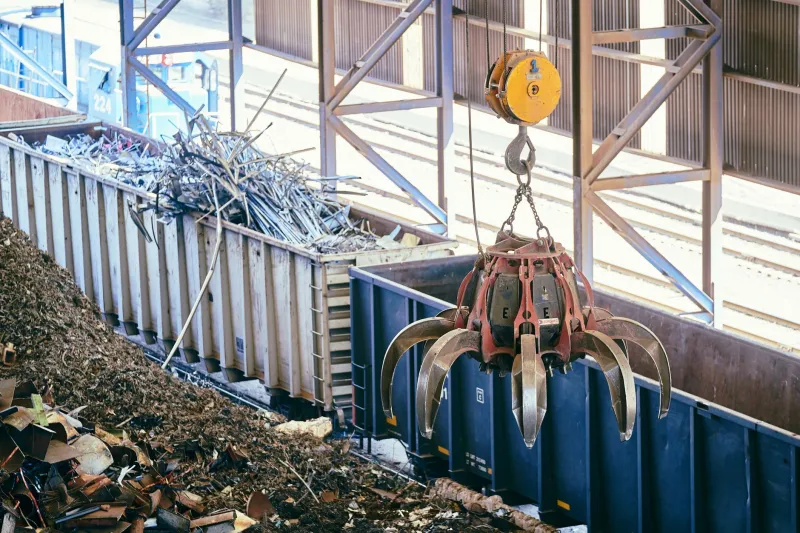
For a load that’s mostly metal — old radiators, pipework, shelving, a dead exercise bike and a few offcuts — a priced scrap collection can be the fairer, simpler option. It’s especially useful if you don’t have a van, you’ve got bulky items, or your local site has limits that make the trip impractical.
What a fair collection looks like
A decent collector will ask what you’ve got before quoting, because mixed loads need sorting and contamination affects value. They should explain what they can and can’t take, give you a clear price or pricing basis, and tell you if something will be deducted or refused. They should also provide paperwork — a waste transfer note for the collection — and be able to show their waste carrier registration and scrap metal dealer licence where relevant.
At B&P Scrap Co., we collect scrap metal from UK homes and businesses and price it clearly. We’re not a magic wand for hazardous waste, and we won’t pretend otherwise. But if your load is genuinely scrap metal and the tip has turned you away, a straightforward collection can save the second wasted trip.
A quick load-day checklist
- Check your council’s A-Z before loading.
- Phone if the item is bulky, white goods, a cylinder or a battery.
- Ask about van permits, proof of address and booking rules.
- Separate clean scrap from contaminated items.
- Tape battery terminals and keep batteries out of the metal pile.
- Don’t disguise problem items in a mixed load.
- If you book a collector, ask for a price breakdown and a waste transfer note.
Getting turned away at the tip isn’t a moral failing. It’s usually a paperwork and safety mismatch. Check first, sort sensibly, and choose the route that actually accepts what you’ve got. That’s how you keep the metal moving and the day from turning into a shuttle run.